
blog
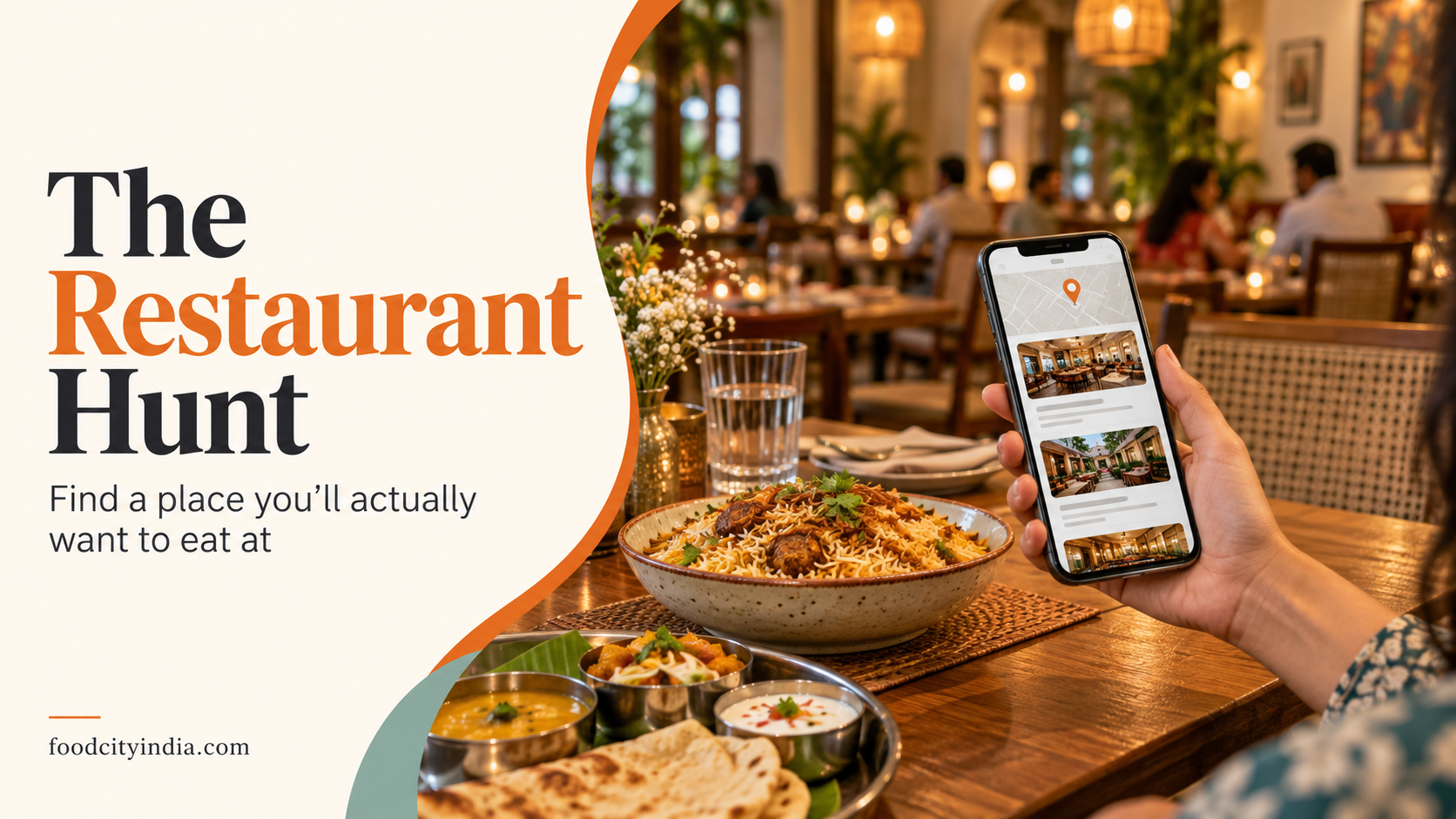
The Restaurant Hunt: How to Find a Place You’ll Actually Want to Eat At
28 September 2026You open your phone to find somewhere to eat. Twenty minutes later, you have looked at a dozen menus, sent three links to a friend, and still haven’t chosen a restaurant.
There are plenty of appealing options. The difficult part is working out which one fits what you want: food you feel like eating, prices you are comfortable with, and a location that makes sense.
Learning how to find restaurants online starts with knowing what to look for. A few specific checks can help you turn a long list of possibilities into a decision you feel good about.
Give Your Search a Clear Starting Point
Before opening another restaurant profile, decide what would make a place suitable today.
Start with the area and the time available. For a weekday lunch in Bangalore, compare the estimated journey at your planned departure time rather than judging by kilometres alone. Leave room for the meal and the return trip. If you are driving, check parking arrangements before settling on a busy neighbourhood.
Then narrow down the food. You do not need to know your exact order, but choosing between a full meal, a light snack, or coffee and something sweet already helps. Add a cuisine preference if you have one.
A search such as “South Indian breakfast in Indiranagar” gives you a clearer starting point than “good food in Bangalore.” If the results are too limited, broaden one part of the search — the neighbourhood or the cuisine.
Keep your spending limit in mind too. An attractive restaurant becomes less appealing if you have to worry about the bill throughout the meal.
Read the Menu Before Getting Attached to the Photos
A beautifully photographed dish can make you stop scrolling. But a restaurant listing website in India should give you more than attractive food photography. The menu tells you whether you actually want to eat there.
Look for a few dishes you would order and check their prices where available. If you are eating with others, make sure the choices work for them as well. A place famous for one speciality may offer little for someone who does not enjoy it.
Vegetarian diners may want several substantial choices rather than only starters and sides. Portion sizes matter too. An individual thali is often easier to budget for when eating alone, while a biryani handi or shared starter platter needs a closer look at how many people it serves. Ask if the portion description is unclear.
Think through a realistic order instead of judging the budget by the cheapest item. A curry with separately priced rice or rotis will cost more than the curry alone. If prices are missing or differ between a photographed menu and an ordering page, request the current dine-in menu for the correct branch.
Use Photos to Understand the Space
Food pictures show only part of a restaurant. Look for photographs of the entrance, dining room, and seating as well.
Are the tables close together? Does the space appear to have proper dining tables or mainly stools and small café seats? Is the seating indoors, outdoors, or a mixture of both?
Use these clues to judge whether you would be comfortable there. Photographs cannot tell you how noisy a room becomes during dinner service, so leave that question for reviews or a direct enquiry.
Read Reviews for the Details That Matter to You
A rating can help you notice a restaurant, but the comments are often more useful when deciding whether it suits you.
Look for descriptions of the meal and visit. Did someone mention generous portions, a long wait for food, or difficulty finding the entrance? Was the restaurant lively in a way you would enjoy, or louder than you would prefer?
The same observation can mean different things to different diners. A busy room with music may appeal to one person and put another off. Notice when the reviewer visited — a quiet weekday lunch says little about Saturday dinner.
Use reviews to answer the questions the menu and photos leave open.
Notice Warning Signs Before Committing
Some listings need a closer check. A very old menu, photographs that appear to show different venues, or conflicting addresses can make it difficult to know what to expect. Check whether the information refers to another branch or was taken before a renovation.
Several recent reviews describing similar problems with cleanliness, service, or unexpected price differences deserve attention. These are customer reports, not independently verified findings, but unresolved patterns are a reasonable reason to consider another option.
An outdated listing alone does not prove a restaurant is poor. It does mean you should resolve the uncertainty before relying on it.
Compare a Small Shortlist
Once two or three restaurants meet your main requirements, compare those options before adding more.
Imagine you are choosing lunch with a colleague. One restaurant has the most interesting menu but requires a longer journey. Another is nearby and has enough dishes you both like. A third looks appealing, but you cannot find current prices.
For a relaxed afternoon, you might choose the first. With an hour available, the nearby option could make more sense. The third needs a quick call before you can judge it fairly.
Choose according to the constraint that matters most today. Keep the other places in mind for a less hurried visit.
Check the Details That Could Change Your Plans
Before leaving, confirm the restaurant’s address and opening hours for the day you intend to visit. If it has several branches, make sure the menu and photographs you checked belong to the correct one.
For a peak-hour visit, ask about reservations and likely waiting times. If the restaurant only accepts walk-ins, allow some flexibility or keep a nearby alternative in mind. Check the kitchen’s closing time if you expect to arrive late.
Be specific when asking about access or seating. “Is there a step-free entrance?” will get a more useful answer than “Is it accessible?” Likewise, confirm dietary requirements directly rather than assuming a dish meets them based on its name or photograph.
You do not need to call every restaurant before every meal. Do it when a missing detail could make the journey disappointing or impractical.
Where FoodCity India Fits into Your Search
When you want to discover restaurants online in India, a good listing site can save time by bringing menus, locations, and contact details together in one place.
FoodCity India lets you browse listed restaurants, view their menus and practical information, and connect with the businesses directly. Its focus is discovery and connection — it does not handle food delivery. Use it to shortlist places that look promising, then confirm the final details with the restaurant before you go.
A Quick Check Before You Head Out
Before closing the search, make sure you can answer these questions:
- Food: Are there dishes everyone wants to eat, in suitable portions?
- Budget: Do you have current prices for a realistic order?
- Journey: Have you allowed for travel, parking, and any wait for a table?
- Practical needs: Are the branch, opening hours, and any essential requirements confirmed?
Once those questions are settled, you have enough to make a choice. Put down the phone and give a promising place a try. The next restaurant you return to might be one you have not eaten at yet.
Show less