
blog
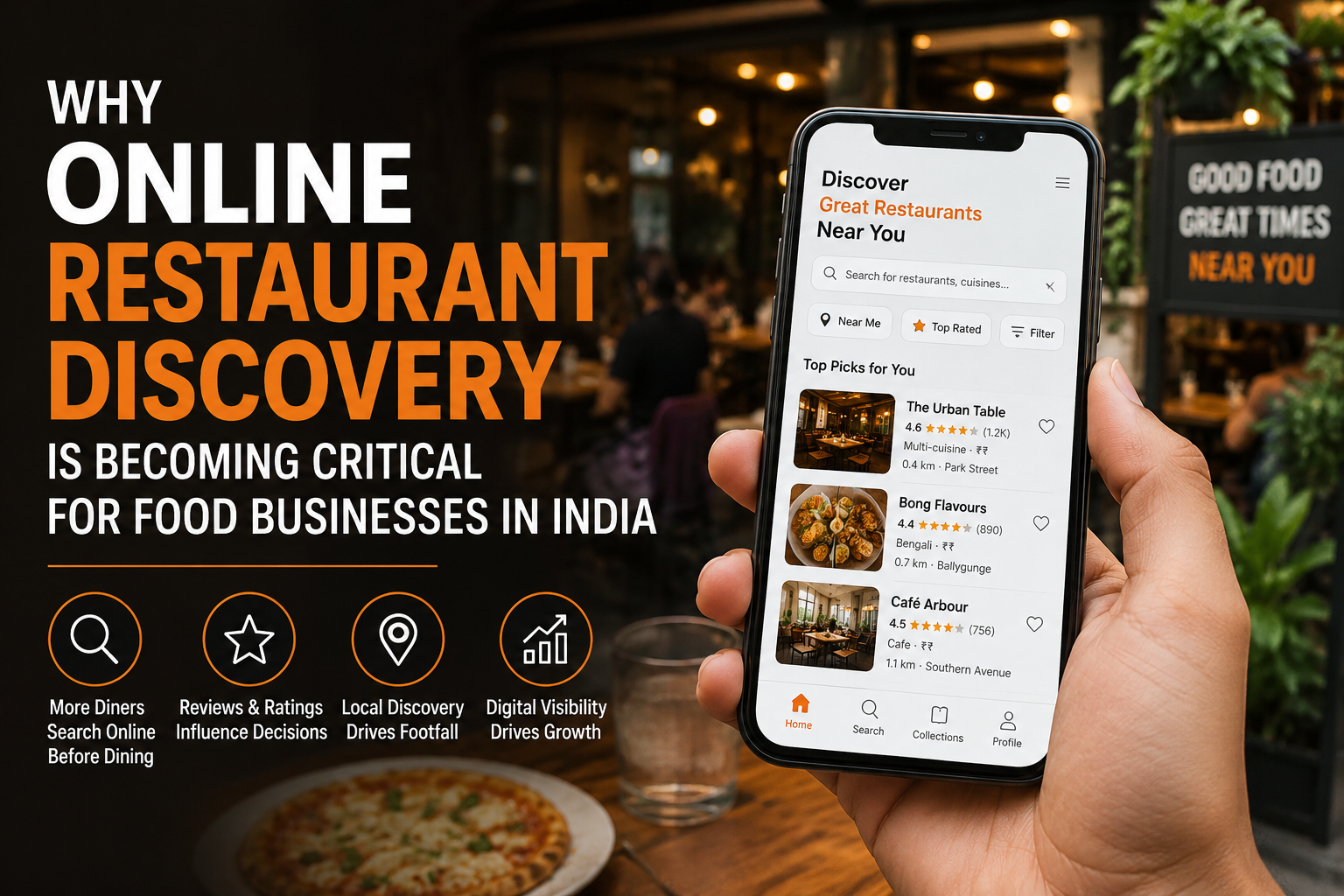
Why Online Restaurant Discovery Is Becoming Critical for Food Businesses in India
23 June 2026Until a few years ago, choosing where to eat was often based on word-of-mouth recommendations, familiar neighbourhood favourites, or simply walking into the nearest restaurant. Today, the dining journey begins much earlier on a smartphone screen.
Whether someone is searching for a cosy cafe for a weekend brunch, a family-friendly restaurant for dinner, or a hidden culinary gem while travelling, digital platforms have become the first point of reference. Indian consumers are increasingly relying on reviews, ratings, photographs, menus and location-based recommendations before deciding where to dine.
As this shift in consumer behaviour accelerates, the ability to discover restaurants online India has become an integral part of the dining experience. For restaurant owners, this trend represents more than a technological change. It is redefining how customers are acquired, how brands are built, and how businesses compete in an increasingly crowded market.
The Rise of Digital Restaurant Discovery in India
India’s digital ecosystem has expanded dramatically over the past decade. According to data from the Telecom Regulatory Authority of India (TRAI), the country had over 970 million internet subscribers in 2025, while smartphone adoption continues to grow across both metropolitan areas and smaller cities.
This digital penetration has transformed consumer habits across industries, including food and hospitality.
Research by Google has consistently shown that a majority of consumers search online before visiting a local business. Dining decisions are no exception. Before stepping out, people now compare ratings, browse photographs, read customer experiences and check menus online.
For younger consumers in particular, restaurant discovery has become a digital-first activity. Millennials and Gen Z diners value convenience, authenticity and social proof. A restaurant’s online presence often influences whether it makes it onto a customer’s shortlist.
As a result, platforms that help users discover restaurants online India, whether by exploring featured restaurant profiles and dining destinations, have evolved from being optional marketing channels into essential business tools.
Changing Consumer Behaviour and Dining Preferences
The modern Indian diner is informed, selective and increasingly experience-driven.
Unlike previous generations, consumers are no longer dependent solely on personal recommendations. Instead, they seek validation from online communities and trusted discovery platforms before making decisions.
Several factors are driving this behavioural shift.
First, urban lifestyles have become increasingly fast-paced. Consumers prefer quick access to information that helps them make efficient choices. Instead of calling restaurants individually, they can compare multiple options within minutes.
Second, transparency has become important. Reviews and ratings offer insights into food quality, service standards and ambience. User-generated photographs provide a realistic preview of the dining experience.
Third, experimentation is on the rise. Consumers are more willing to try new cuisines and unexplored establishments if they discover positive recommendations online.
This changing behaviour means that restaurants with limited digital visibility risk losing customers before those customers even consider visiting.
Why Being Listed Online Matters More Than Ever
For food businesses, visibility has always been important. However, visibility today extends beyond physical signage and local reputation.
Being present on a credible restaurant listing platform India enables restaurants to appear where consumers are actively searching.
A comprehensive online listing typically provides essential information, including:
- Address and contact details.
- Operating hours.
- Menus and pricing.
- Customer reviews.
- Photographs of dishes and interiors.
- Directions and reservation options.
When this information is accurate and regularly updated, it reduces friction in the customer journey.
Consider a family planning dinner on a Friday evening. If one restaurant has detailed information, recent reviews and appealing images while another has no digital footprint, the choice becomes obvious.
Online listings also improve discoverability through search engines. Restaurants with optimised profiles often rank higher in local searches, increasing their chances of attracting nearby customers.
For independent restaurants with limited advertising budgets, this can create a level playing field against larger chains.
The Growing Importance of Local Discovery
One of the most significant trends shaping the hospitality sector is the rise of local intent searches.
Consumers increasingly use phrases such as “restaurants near me,” “best cafes nearby,” or “family restaurants in my area” when searching online.
Google reports that local searches have grown steadily over the years, with users expecting immediate and relevant results.
This shift has important implications.
Restaurants are no longer competing solely within their neighbourhoods. Instead, they compete for visibility in digital search results.
For businesses in regional markets, this presents a major opportunity.
Take eastern India as an example. The demand for a reliable restaurant listing website Kolkata reflects how consumers in cities beyond Delhi, Mumbai and Bengaluru are embracing digital discovery.
Kolkata’s evolving food culture, ranging from heritage eateries to contemporary cafes and specialty restaurants, has generated a growing appetite for platforms that simplify dining decisions.
Restaurants that establish a strong presence on a trusted restaurant listing website Kolkata can significantly enhance their reach among residents, tourists and professionals seeking new experiences.
Building Trust Through Reviews and Social Proof
Trust remains one of the most powerful drivers of consumer decision-making.
According to BrightLocal’s consumer studies, a large majority of consumers read online reviews before engaging with local businesses. Restaurants are among the categories most influenced by ratings and customer feedback.
Positive reviews reassure potential diners.
Constructive responses to criticism demonstrate accountability.
Consistent engagement reflects professionalism.
For many consumers, a restaurant’s digital reputation serves as an extension of its brand identity.
Importantly, authenticity matters. Diners increasingly recognise overly promotional messaging. Genuine customer experiences carry greater influence than traditional advertising claims.
Restaurants that actively encourage satisfied guests to leave reviews often benefit from stronger credibility and higher conversion rates.
Opportunities for Small and Independent Restaurants
Large restaurant chains typically have established marketing budgets and brand recognition.
Independent establishments, however, often rely heavily on local awareness and repeat customers.
Digital discovery platforms are helping bridge this gap.
A thoughtfully maintained profile on a restaurant listing platform India allows smaller businesses to showcase their strengths through dedicated restaurant pages, whether that is exceptional regional cuisine, personalised service or unique ambience.
It also enables niche restaurants to attract audiences seeking specialised experiences.
For example, a family-run Bengali eatery can reach travellers interested in authentic local flavours, while a vegan cafe can connect with health-conscious consumers searching for specific dietary options.
The democratisation of visibility means that quality and customer experience can increasingly drive success, regardless of business size.
Challenges Restaurants Must Address
Despite the opportunities, digital discovery is not without challenges.
Maintaining accurate information across multiple platforms requires ongoing attention. Outdated operating hours, incorrect contact details or old menu listings can frustrate potential customers.
Managing reviews also demands sensitivity and responsiveness.
Negative feedback, if ignored, can damage perception. However, thoughtful engagement often demonstrates a commitment to improvement.
Competition presents another challenge.
As more businesses recognise the importance of online visibility, standing out becomes more difficult. Restaurants need compelling photographs, detailed descriptions and consistent customer experiences to differentiate themselves.
Success, therefore, requires more than simply creating an online profile. It requires active participation and continuous optimisation.
The Road Ahead
India’s restaurant industry is entering a new phase where discovery is becoming as important as dining itself.
Rising internet penetration, growing smartphone usage and evolving consumer expectations will continue to shape how people choose where to eat.
The future is likely to bring increasingly personalised recommendations powered by artificial intelligence, voice-enabled local searches and deeper integration between discovery, reservations and customer engagement.
At the same time, consumers will continue seeking authenticity, transparency and convenience.
For restaurants, adapting to these changes is no longer optional.
The ability to discover restaurants online India is now embedded in everyday consumer behaviour. Establishing visibility through a trusted restaurant listing platform India can help businesses strengthen brand awareness, attract new audiences and build long-term customer relationships.
In markets with vibrant culinary ecosystems, a restaurant listing website Kolkata that also enables users to discover cuisine-specific recommendations and local favourites will become even more significant as diners look beyond familiarity to explore diverse experiences.
Ultimately, restaurants that embrace digital discovery not merely as a marketing tactic but as a strategic growth channel will be better positioned to thrive in India’s increasingly competitive food landscape.
In an era where the first impression is often made online, being discoverable may determine who gets chosen, who gets recommended and who continues to grow.