
blog
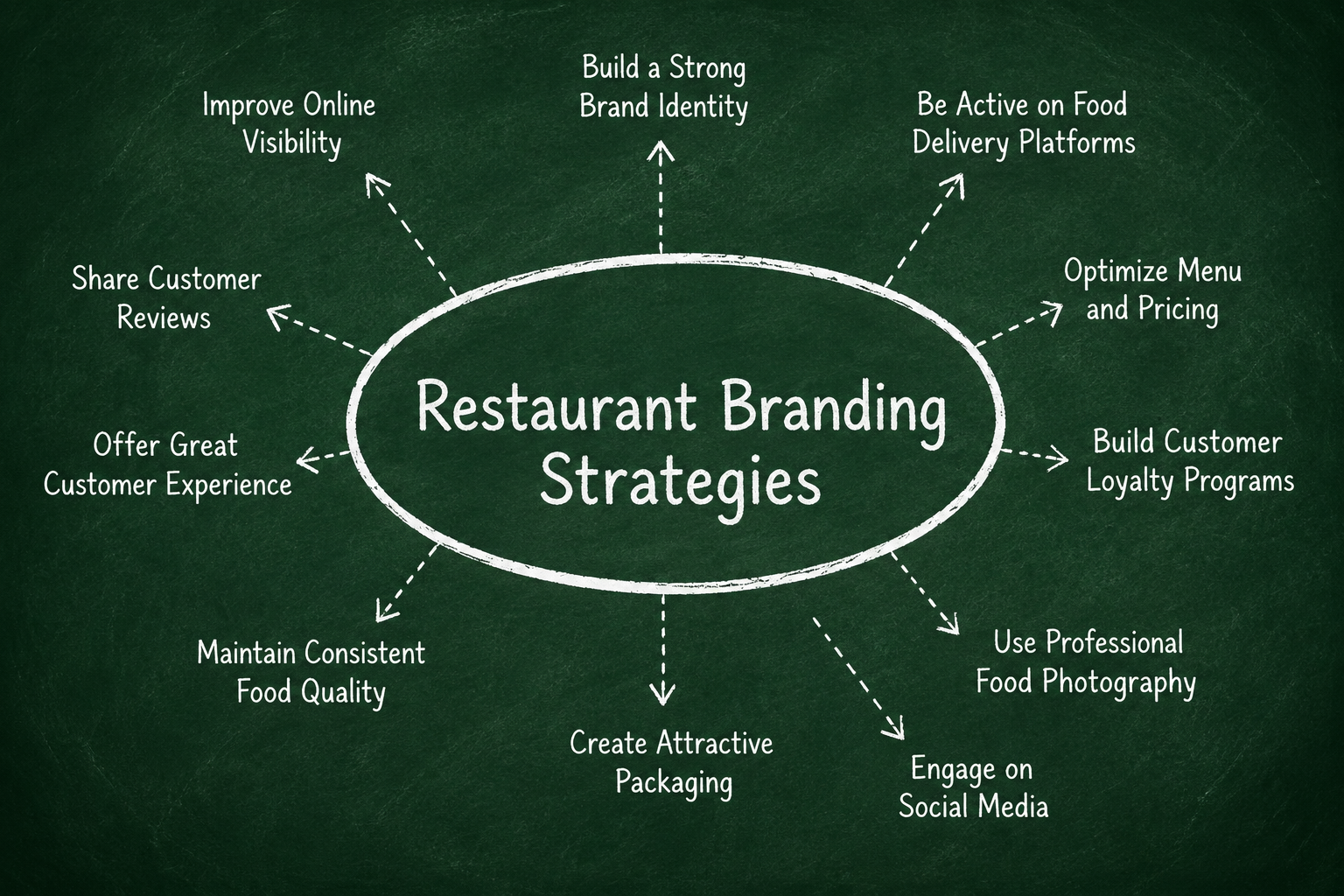
Restaurant Branding Strategies That Actually Increase Orders
18 May 2026Why Restaurant Branding Matters More Than Ever
Running a restaurant today is very different from what it was even five years ago. Good food alone is no longer enough to attract customers consistently. People now discover places online before they decide where to eat. They check photos, reviews, menus, ratings, social media pages, and even how active a business looks on the internet before placing an order or visiting in person.
For restaurant owners, this shift has changed the meaning of branding completely. Branding is no longer just about a logo or a signboard outside the restaurant. It is now about the full online experience customers see before they even taste the food.
According to a recent report by Zomato, more than 70% of urban Indian customers search online before ordering from a new restaurant. Another survey from Google showed that businesses with complete online profiles receive significantly higher engagement compared to those with incomplete or outdated information. This means that restaurants that invest in branding and online visibility are often the ones receiving more orders, better customer trust, and stronger repeat business.
For restaurants in competitive cities like Bangalore, where thousands of food businesses compete every day, branding has quietly become one of the biggest deciding factors behind customer choices.
First Impressions Directly Impact Orders
The first thing customers usually notice is presentation. A restaurant with poor-quality photos, incomplete menus, or outdated information instantly creates doubt. Customers assume the food quality may also be inconsistent. On the other hand, professionally presented restaurants appear more trustworthy even before the first order is placed.
This is one reason why many of the best restaurants in Bangalore invest heavily in visual branding. They understand that customers eat with their eyes first. Clean food photography, organized menus, attractive packaging, and consistent colors across platforms create a strong first impression that directly impacts conversion rates.
A restaurant owner may spend lakhs designing interiors but ignore how their restaurant appears online. In reality, for delivery-focused businesses and cloud kitchens, the online profile is the actual storefront. Customers judge the business within seconds. If the restaurant looks inactive, confusing, or unprofessional online, they move on quickly to another option.
Customer Reviews Build Trust Faster Than Advertising
Reviews play a massive role in branding. Research from BrightLocal found that nearly 87% of consumers read online reviews before making a purchase decision. In the restaurant industry, this percentage is even higher. Customers trust other customers more than advertisements.
Many restaurant owners make the mistake of focusing only on getting more reviews instead of improving the review experience itself. The most effective restaurants respond to customer feedback actively. They thank happy customers and professionally handle negative experiences without arguments or defensive replies.
A thoughtful response to a negative review can sometimes improve trust more than a perfect five-star rating. Customers understand that mistakes happen. What matters is how the business reacts when something goes wrong.
Consistency Creates Repeat Customers
Consistency is another important factor that directly affects repeat orders. Branding becomes weak when customers receive a different experience every time they order. This includes food quality, packaging, delivery experience, menu accuracy, and communication style.
For cloud kitchens especially, consistency creates loyalty. Since customers cannot physically visit the location, the brand experience depends entirely on delivery quality and digital interaction. If a customer orders biryani twice and receives completely different taste or presentation each time, trust drops immediately.
This is why many successful food brands create detailed preparation systems, packaging standards, and customer handling processes. They understand that repeat customers are more profitable than constantly chasing new ones.
Studies show that increasing customer retention by just 5% can increase profits by up to 25% to 95% depending on the business model. For restaurants operating on tight margins, repeat customers often become the difference between average growth and long-term sustainability.
Online Visibility Is a Major Growth Factor
Online discoverability is another area many restaurants underestimate. A restaurant may serve excellent food but still struggle because customers cannot find it easily online. This is where listing platforms and local visibility become important.
When customers search phrases like “cafes near me,” “family restaurants,” or restaurant listing platform India, they usually choose businesses that appear complete, active, and trustworthy. Restaurants that are visible across multiple trusted platforms naturally receive more attention.
This is where platforms like Food City India help businesses improve visibility beyond delivery apps alone. Many restaurants rely entirely on aggregator platforms, but depending on only one source of traffic can become risky over time. Building visibility across restaurant-focused discovery platforms creates stronger brand presence and additional customer reach.
Branding Is About Emotional Connection
Restaurants also need to understand that branding is emotional. Customers remember how a restaurant makes them feel. This includes the tone used on social media, the way complaints are handled, the design of packaging, and even how the menu descriptions are written.
Simple details create stronger memory than most businesses realize. A handwritten thank-you note inside packaging, quick customer support, or consistent visual identity can make customers remember a restaurant longer. Emotional branding often increases repeat orders because customers begin associating the brand with reliability and comfort.
Social Media Is Now Part of Restaurant Identity
Social media presence has also become deeply connected with restaurant branding. However, many businesses misunderstand social media strategy completely. Posting random food photos daily without consistency rarely creates meaningful engagement.
Successful restaurant pages usually focus on storytelling rather than only promotion. They show kitchen moments, chef specials, preparation processes, customer experiences, and behind-the-scenes content that feels real. Customers connect more with authenticity than overly polished advertisements.
Video content has become especially powerful. Instagram reports that short-form video content receives significantly higher engagement than static posts. Restaurants showing food preparation, plating, customer reactions, or trending dishes often attract stronger organic reach compared to standard image posts.
At the same time, branding should remain aligned with the actual customer experience. Overselling online but underdelivering offline damages trust quickly. Customers today share experiences instantly through reviews, reels, and social media posts. A weak experience spreads fast.
Smart Menus Increase Customer Decisions
Menu design also affects branding and ordering behavior more than most owners realize. Restaurants with cluttered menus often confuse customers and reduce conversion rates. Clear menu organization, proper descriptions, and smart pricing presentation improve decision-making and encourage higher-value orders.
Many successful restaurants now engineer menus carefully using customer behavior data. They highlight profitable items visually, simplify categories, and reduce unnecessary options. Research from menu psychology studies suggests that overly large menus can actually reduce customer satisfaction because too many choices create hesitation.
Local SEO Helps Restaurants Get Discovered
Another major shift happening in the restaurant industry is the growing importance of local SEO. When customers search for discover restaurants online India, Google prioritizes businesses with strong local signals, updated information, positive reviews, and active engagement.
Restaurants that regularly update photos, maintain accurate business information, and stay active online usually rank better in local search results. This increases organic discovery without depending entirely on paid advertisements.
For smaller restaurants and independent cafés, this creates a major opportunity. Strong branding allows local businesses to compete with larger chains more effectively. Customers increasingly support brands that feel personal, trustworthy, and authentic rather than overly corporate.
Cloud kitchens especially benefit from strong digital branding because they operate without physical customer interaction. In many cases, branding becomes the only way customers differentiate one kitchen from another. Packaging quality, food presentation, ratings, social proof, and online visibility become the new version of restaurant ambience.
Final Thoughts
The restaurants growing fastest today are usually the ones combining good food with strong digital presence. They understand that modern customers are not just buying meals. They are buying convenience, trust, consistency, and experience.
Restaurant branding is no longer optional. It directly impacts how customers discover businesses, how much they trust them, and whether they order again. In a market filled with endless choices, branding helps restaurants stay memorable.
For restaurant owners, cafés, and cloud kitchens looking to grow steadily, the focus should not only be on increasing orders today but also on building a recognizable and trusted brand for the future. Businesses that invest in presentation, reviews, customer experience, visibility, and consistency are the ones most likely to see long-term growth.
As competition continues increasing across India’s food industry, restaurants that build stronger online identities will have a clear advantage. Customers may forget a discount quickly, but they rarely forget a brand experience that feels reliable, professional, and memorable.